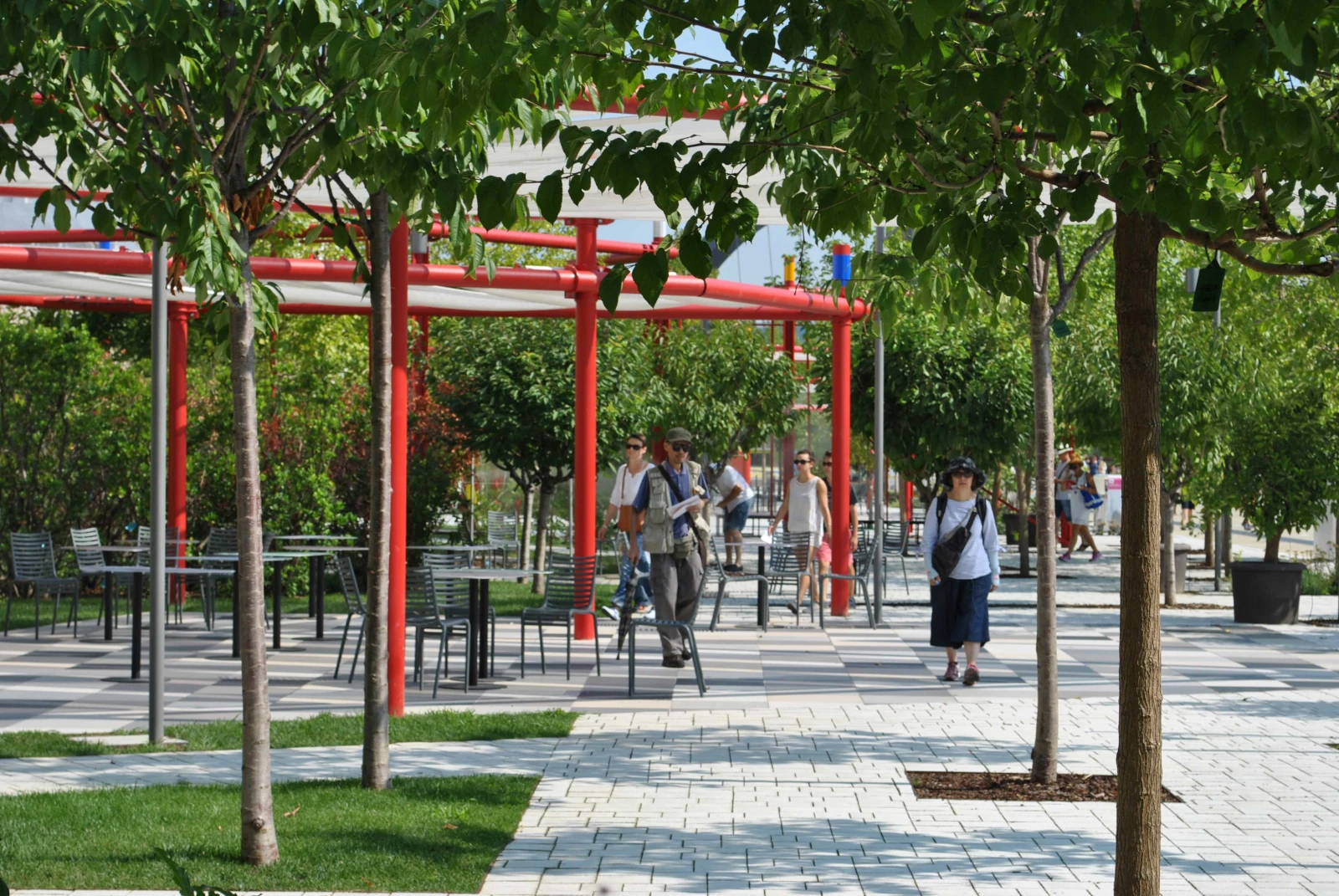
The project for Expo Milano 2015 is an intervention for an exhibition park that is configured as a new urban centrality. The redevelopment of a peri-urban area of Milan for the Exhibition represents a pioneering intervention aimed at renewing the relationship with the surrounding urban context, strongly influenced by the presence of large infrastructures. The site became an international attraction at the Exposition and a solid foundation for the development currently taking place.
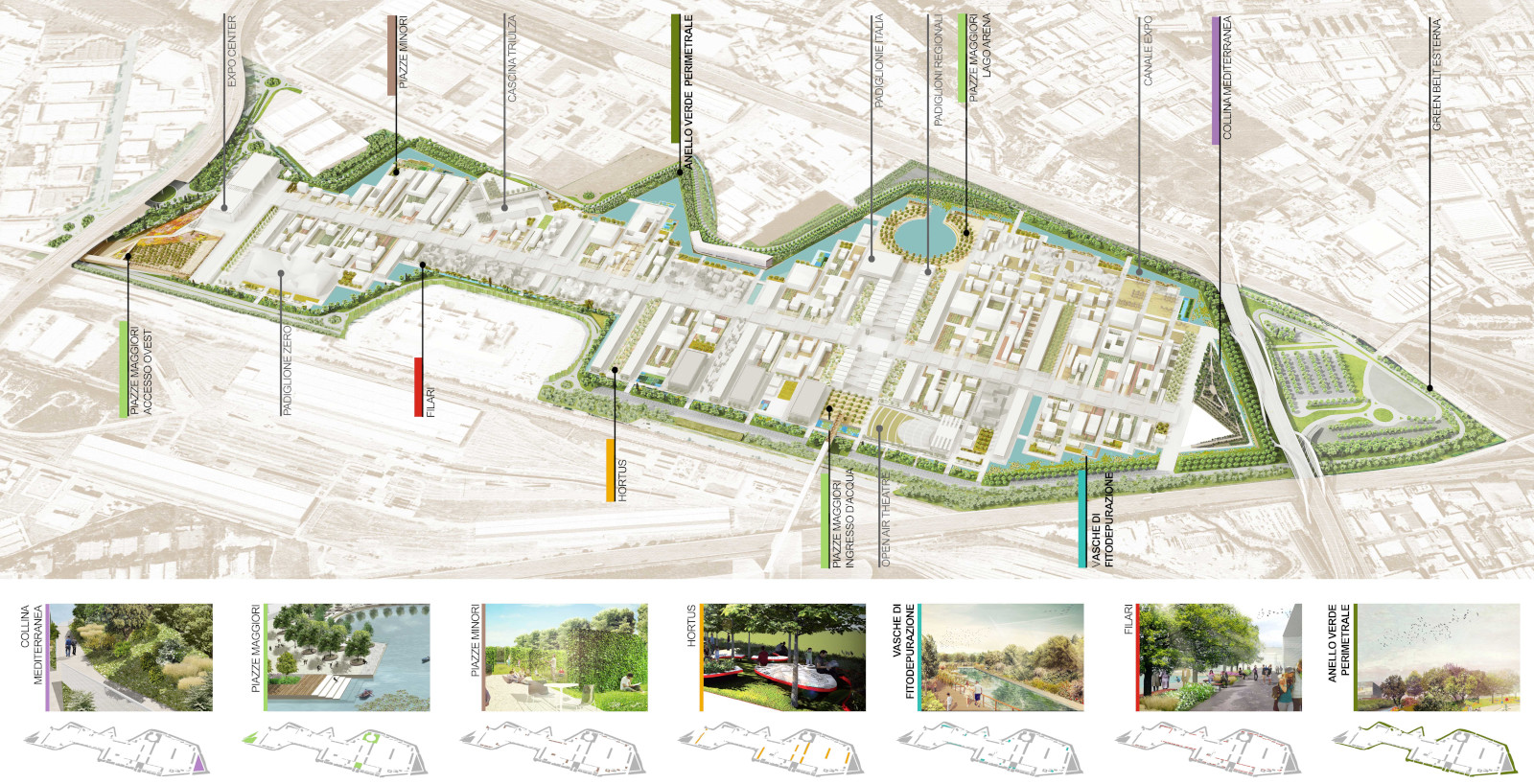
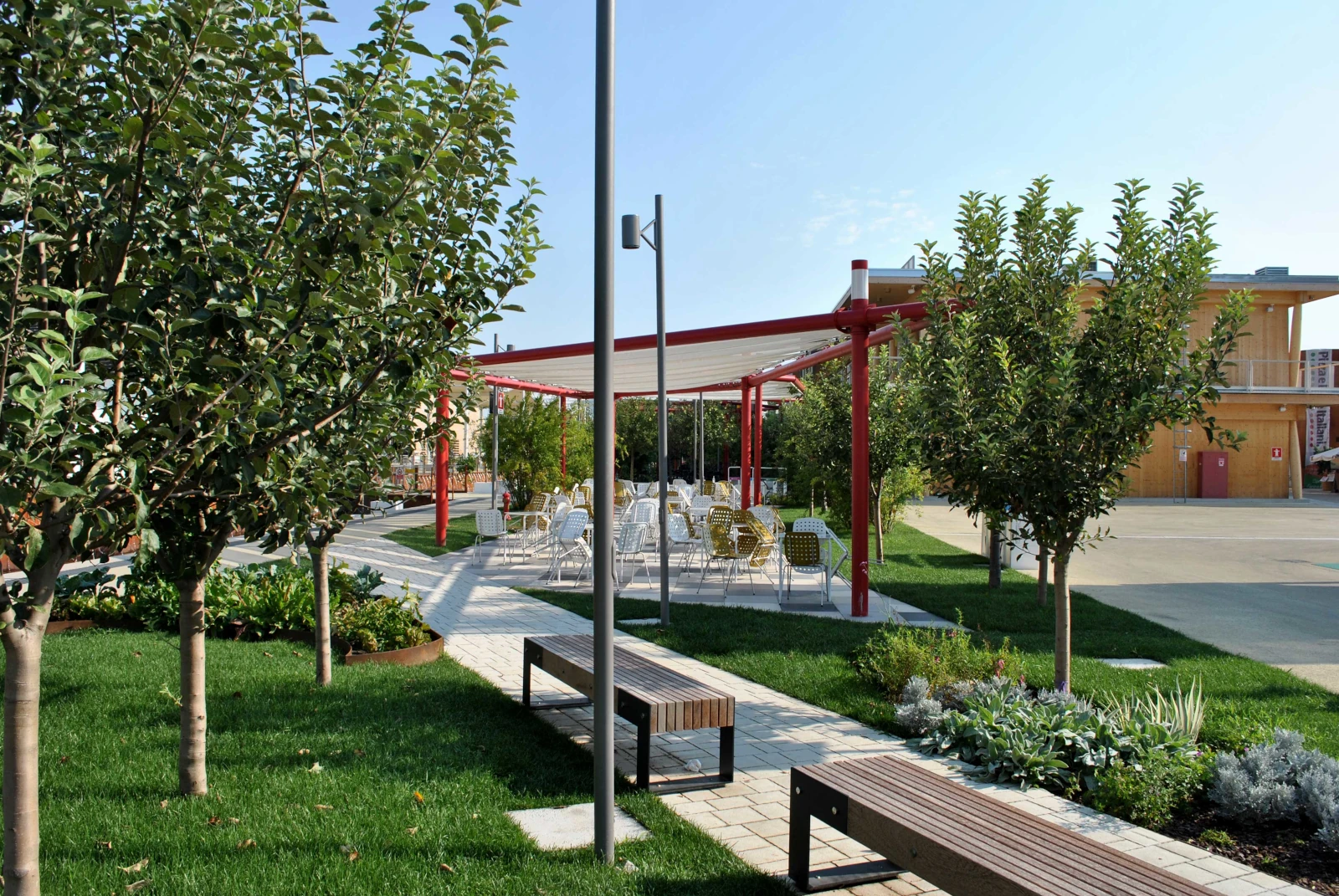
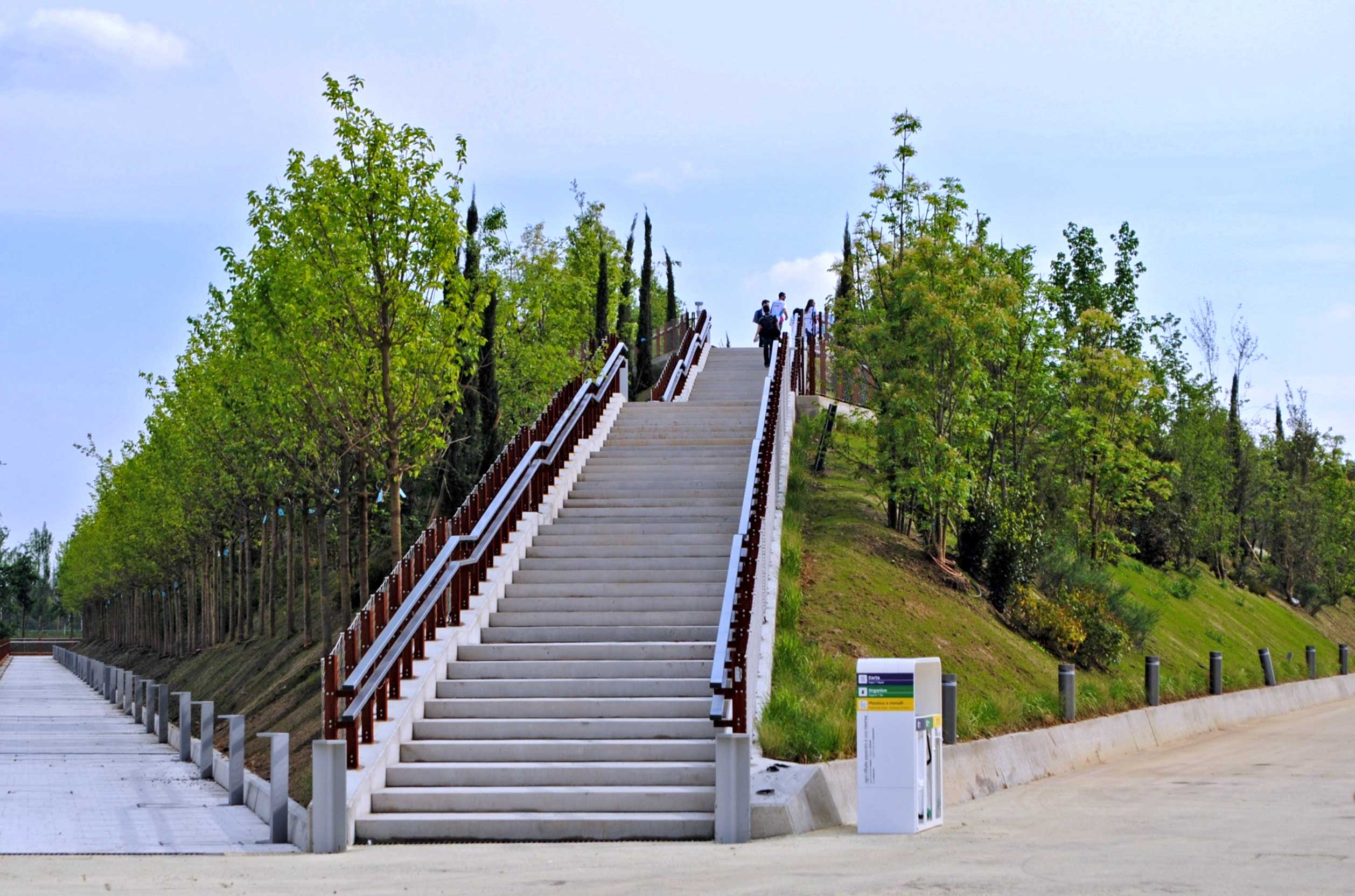
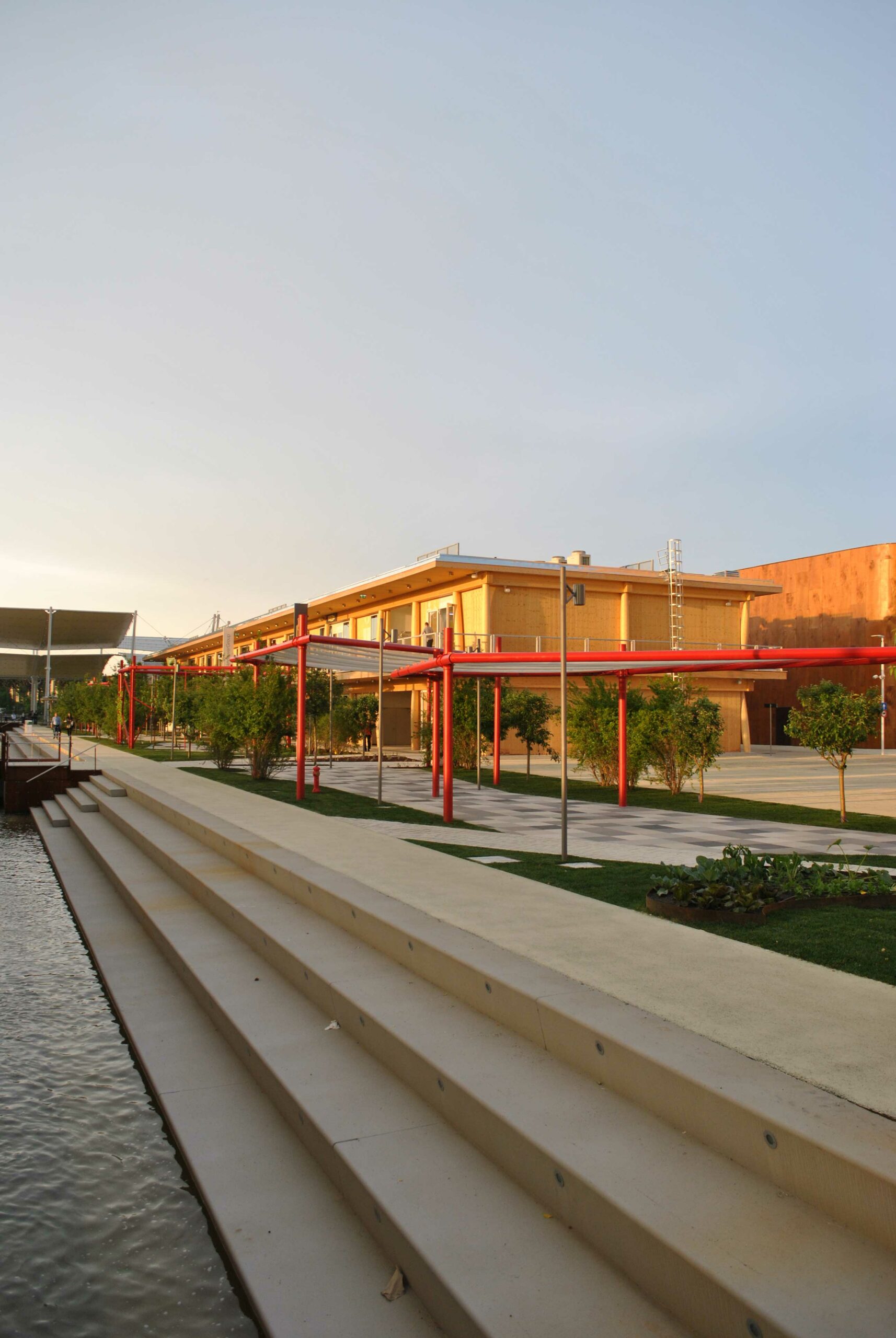
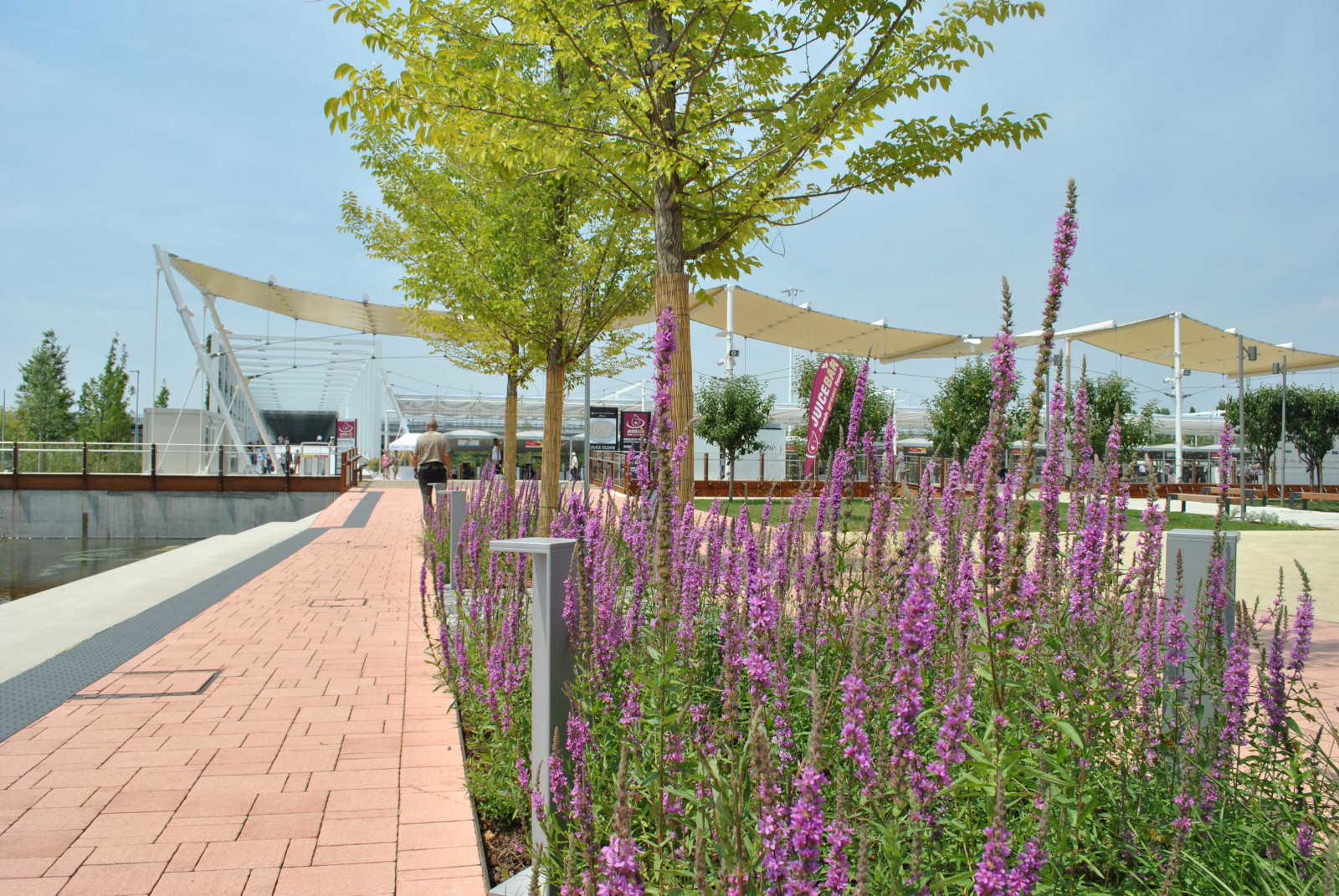
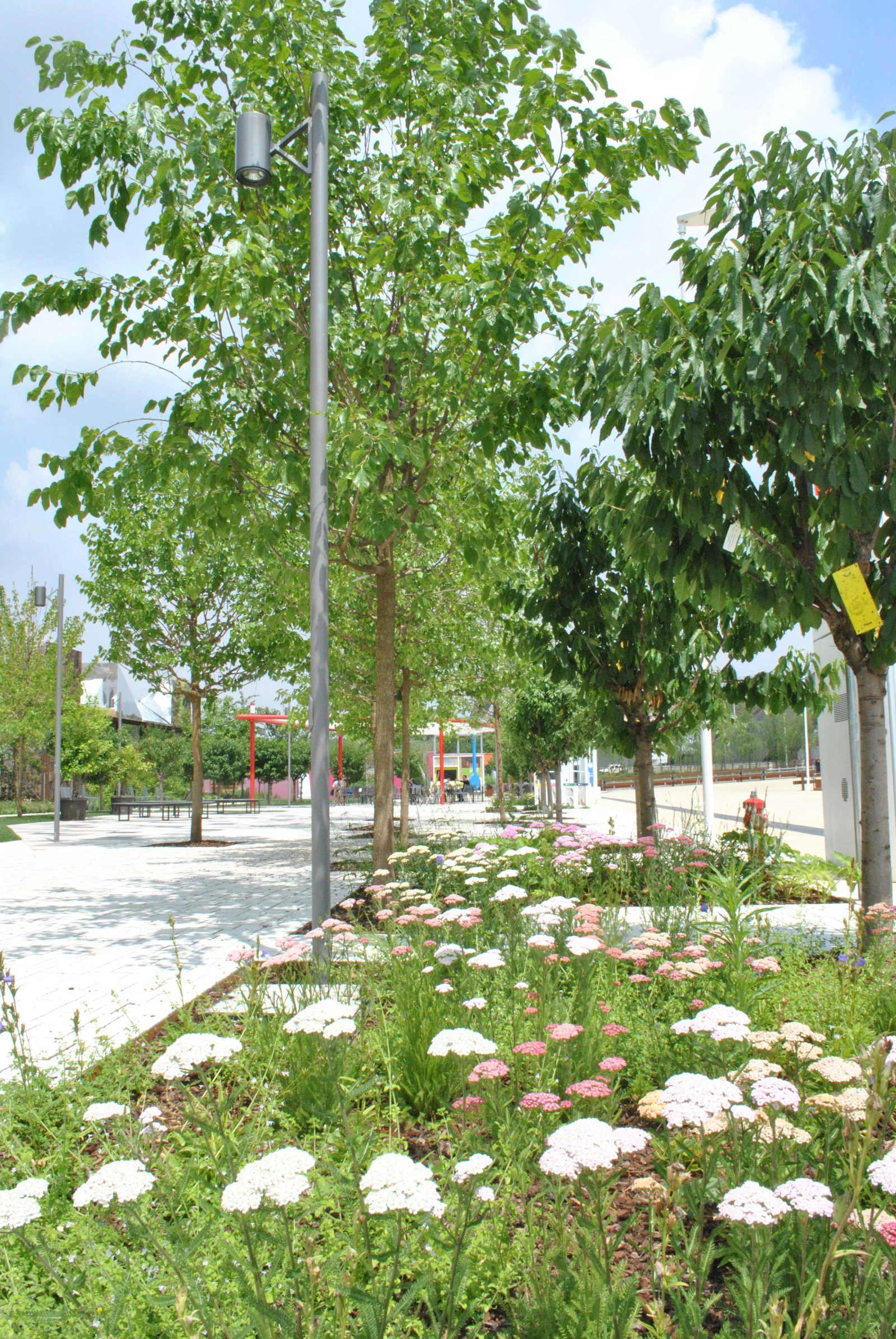
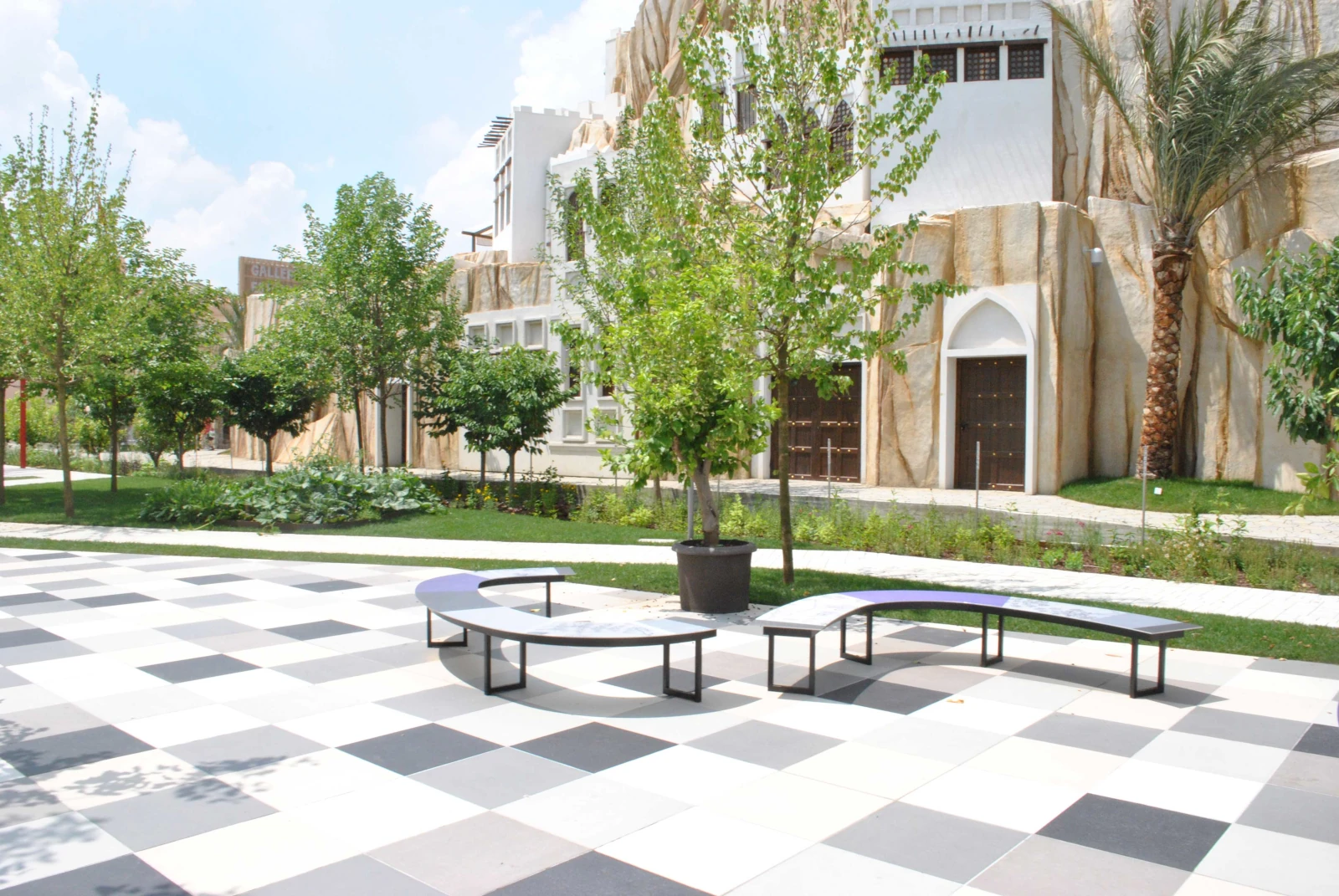
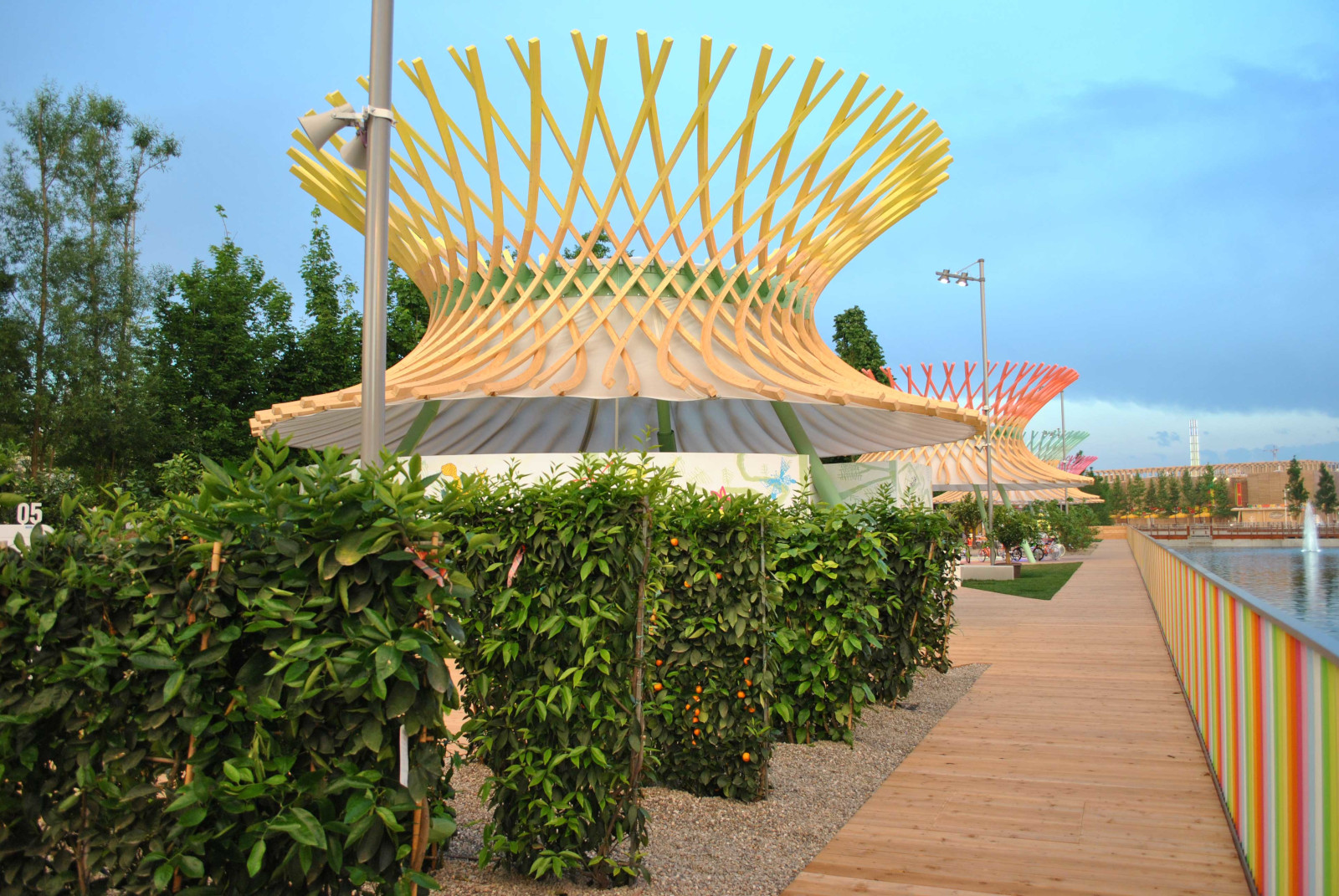
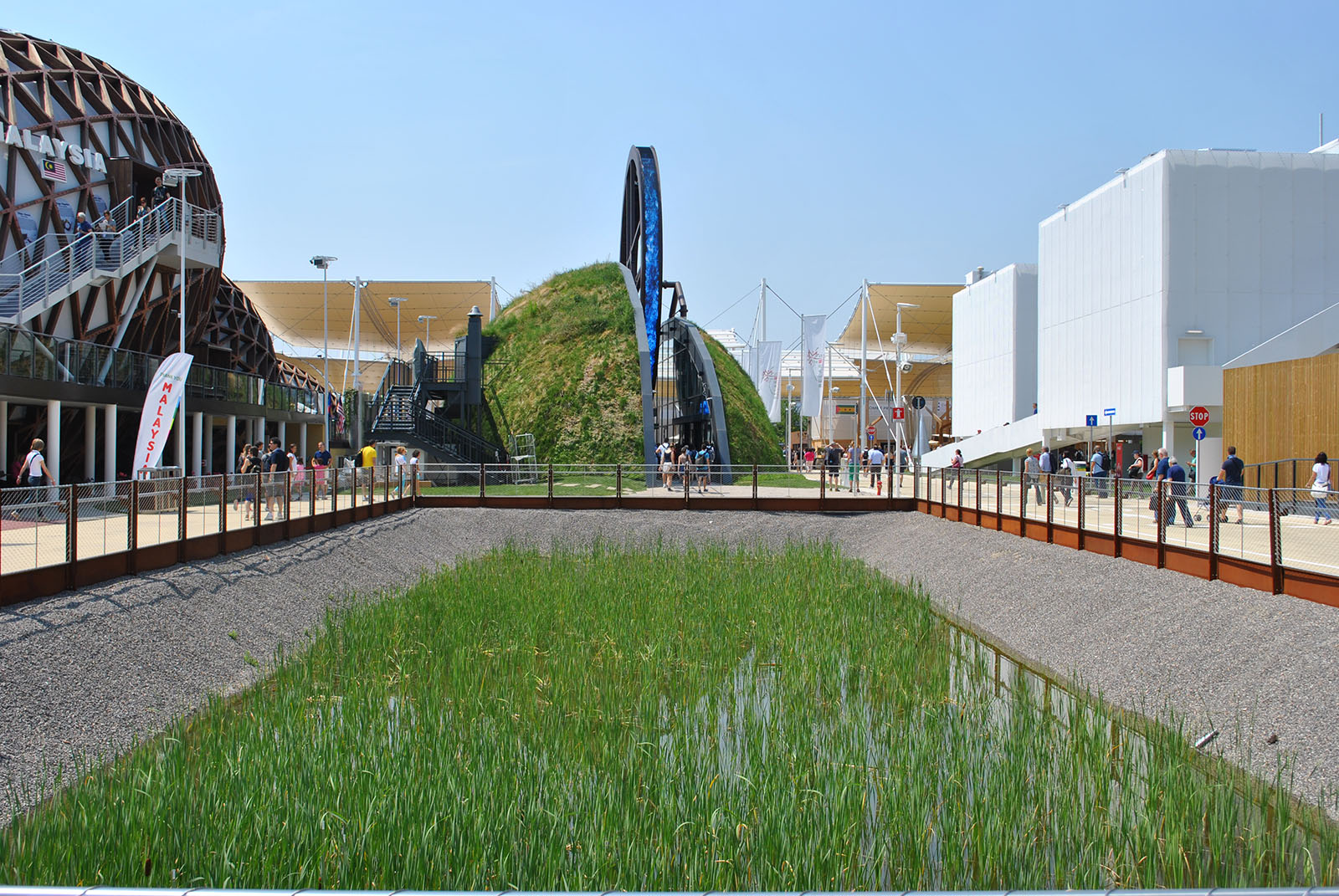
The lot dedicated to the design of the public open spaces of the Exhibition, “the plate”, located in the inner island, based on the settlement model of the Roman castrum (as an archetypal principle of urban generation), includes 7 landscape areas that reinterpret elements of the natural landscape, rural and urban, configuring themselves as relational spaces of sociality. They are structured according to an educational-exhibition path developed on the relationship between man and nature: from the primordial naturalness of the external forest, to the regenerated nature of the phytopurification tanks and usable internal canals, to the re-enactment of elements of the agricultural landscape in the rows, to the Mediterranean hill between naturalness and human modeling, to the Hortus, a citation of the agricultural origin of the art of gardens, up to the more urban, convivial and formal landscapes of the squares.
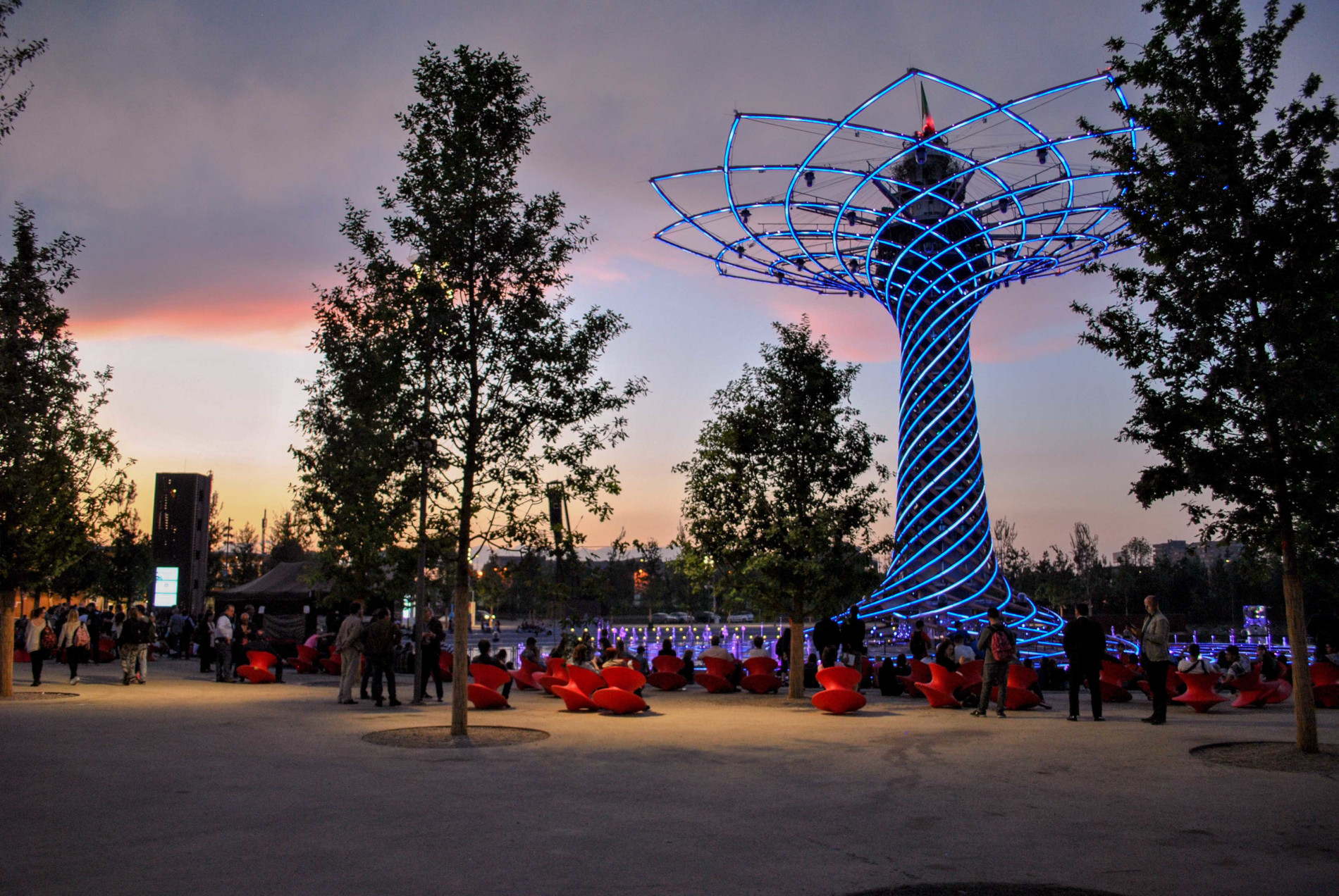
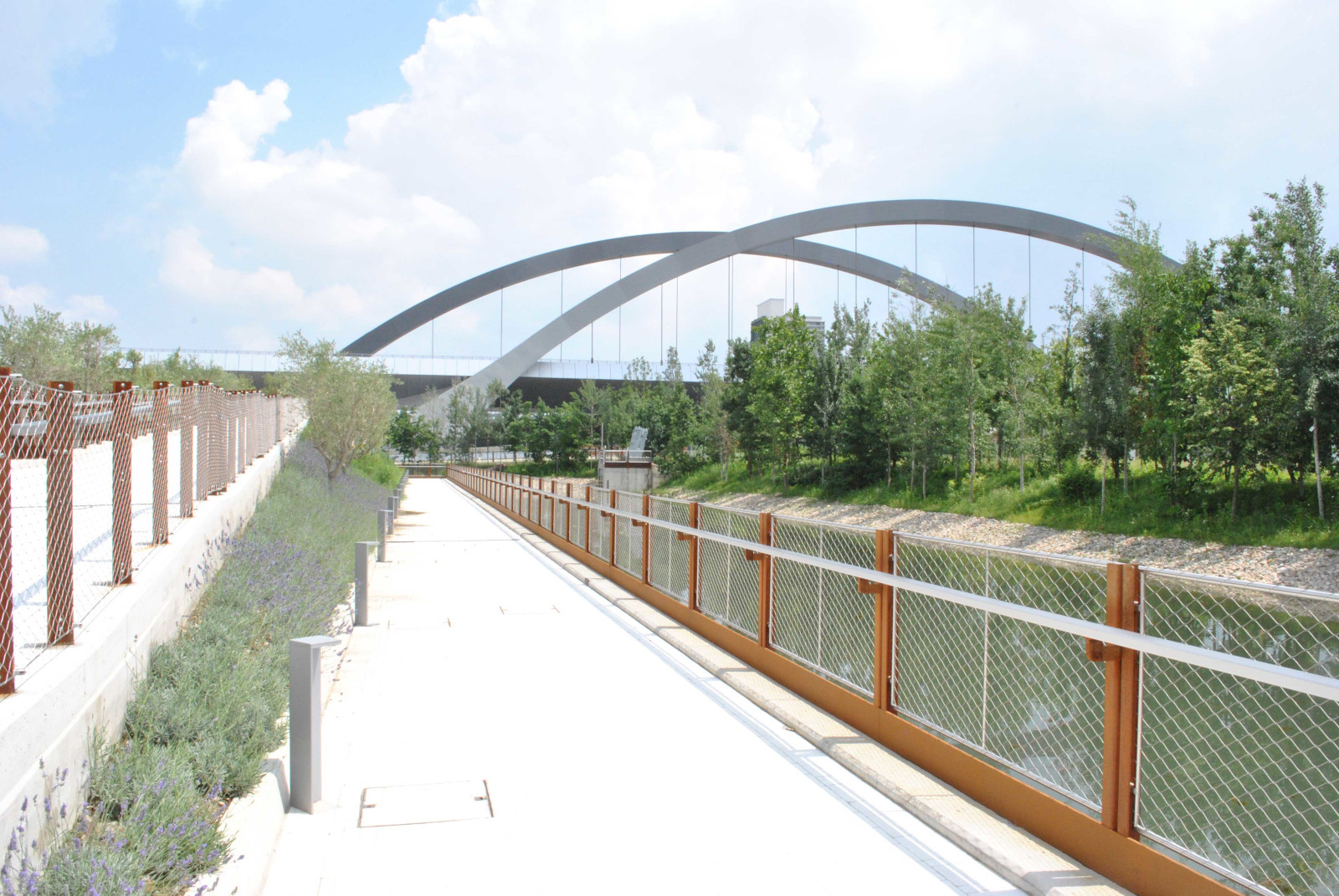
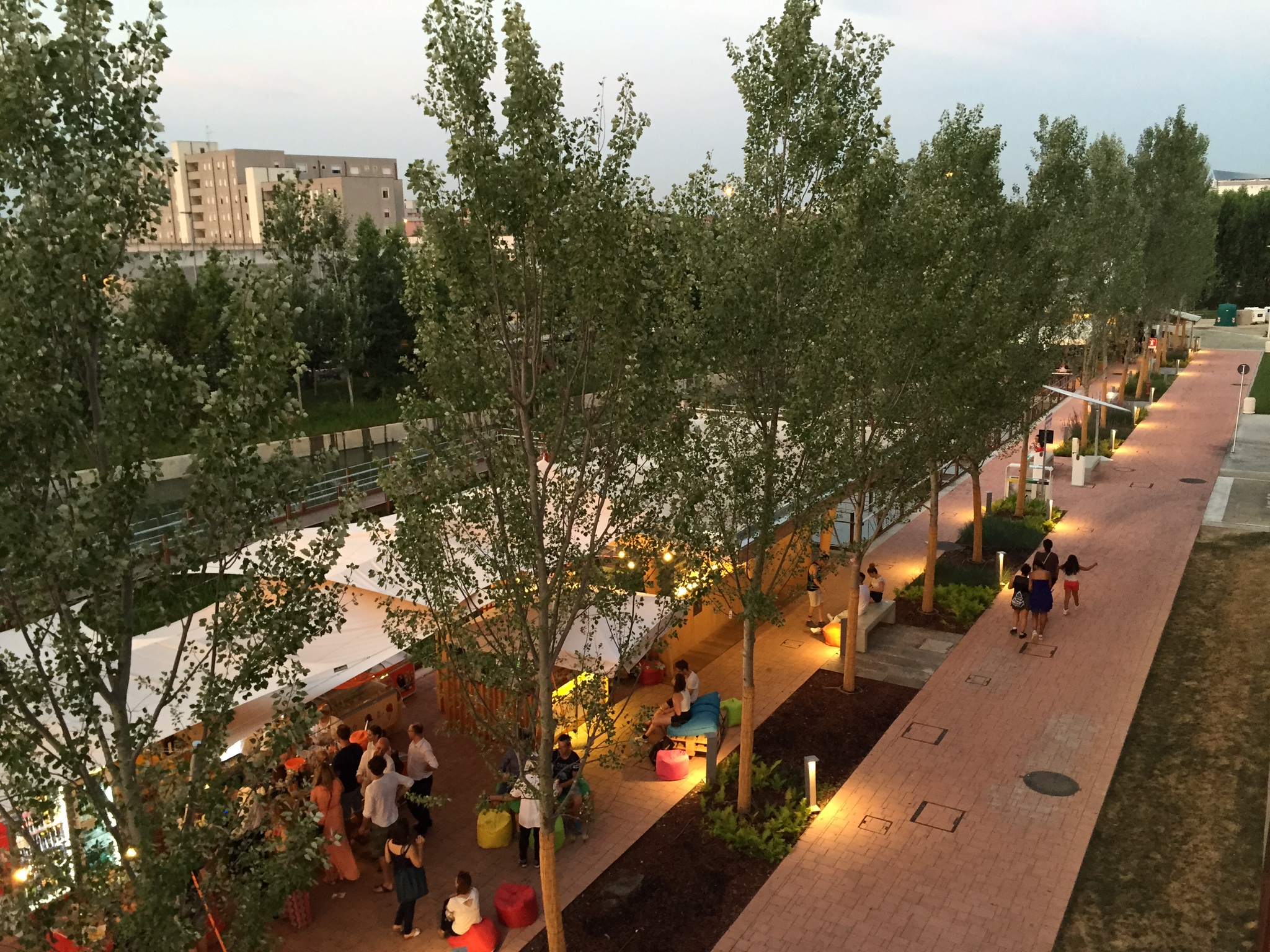
The project presents the typical implications of a large universal exhibition with the necessary recreational and connection functions. The collective and recreational spaces include major and minor squares, play areas, the children park, meeting and catering spaces (Hortus), educational gardens, thematic gardens and large green spaces for parking. The routes cover a wide range of types: from tree-lined boulevards with internal connections to the perimeter routes that run alongside the large canal that characterizes the site.
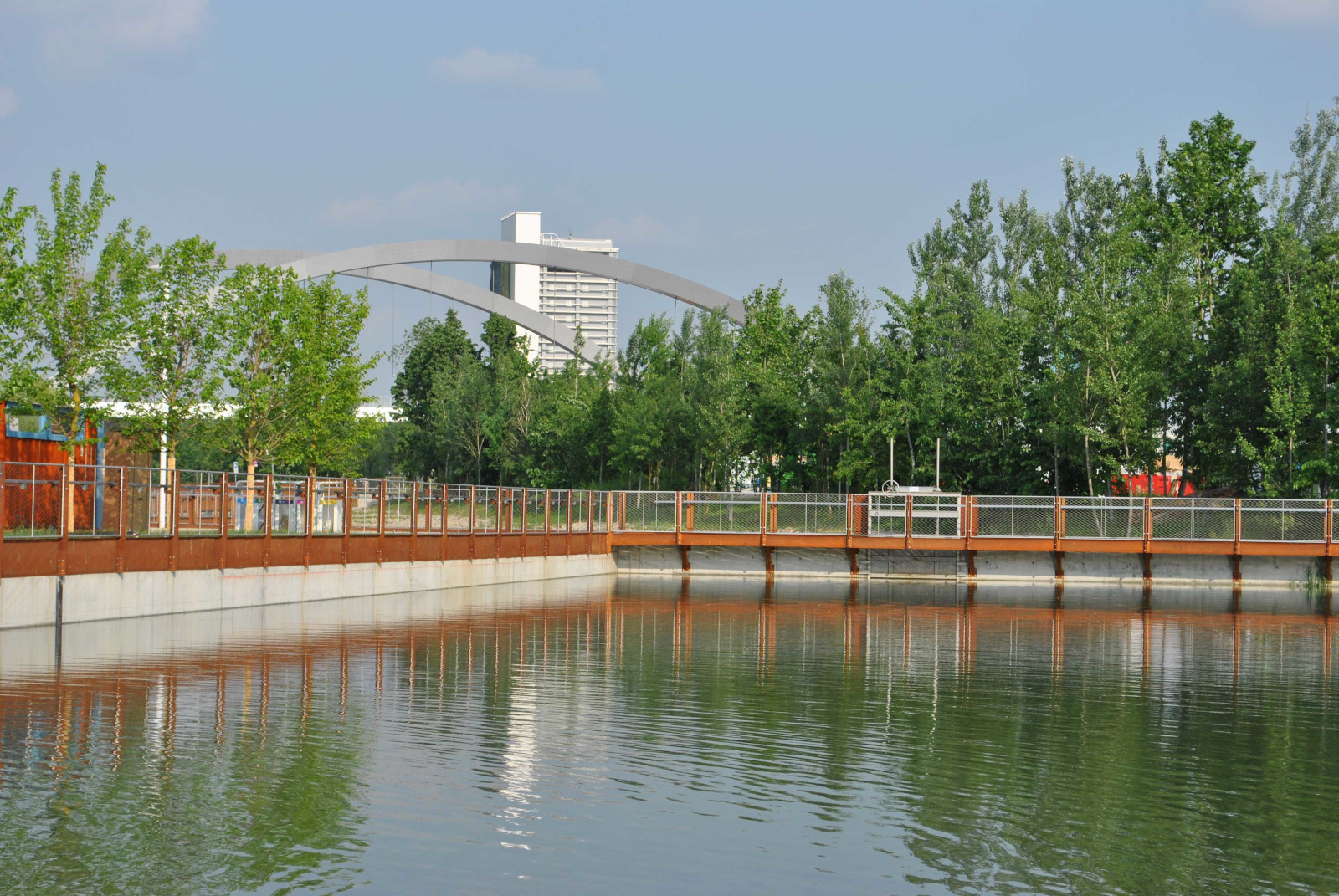
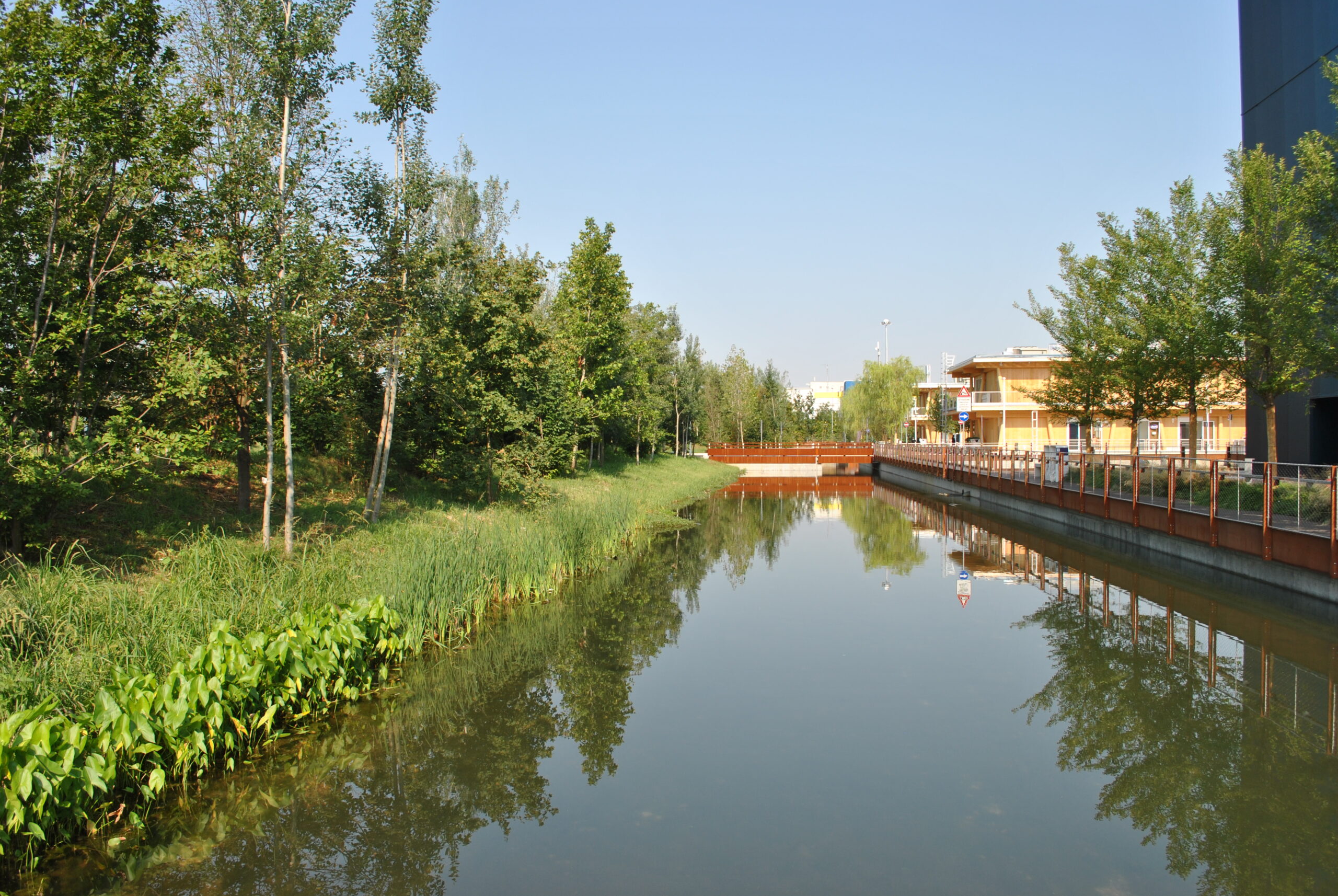
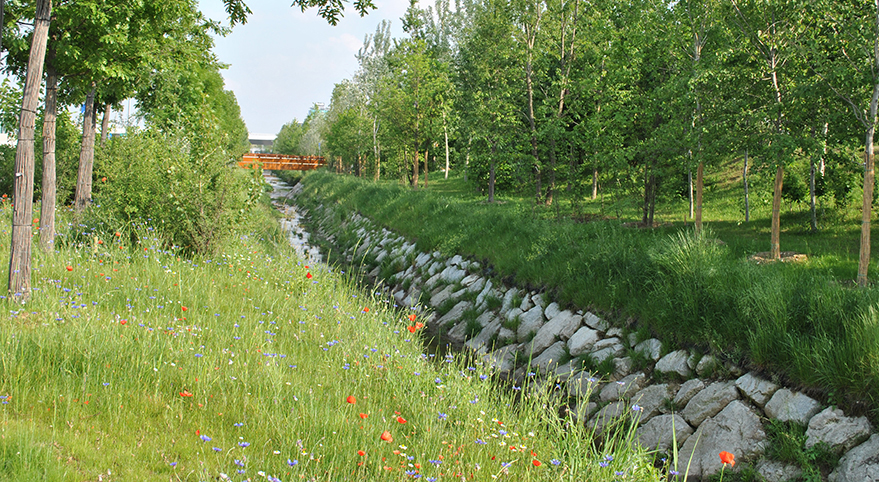
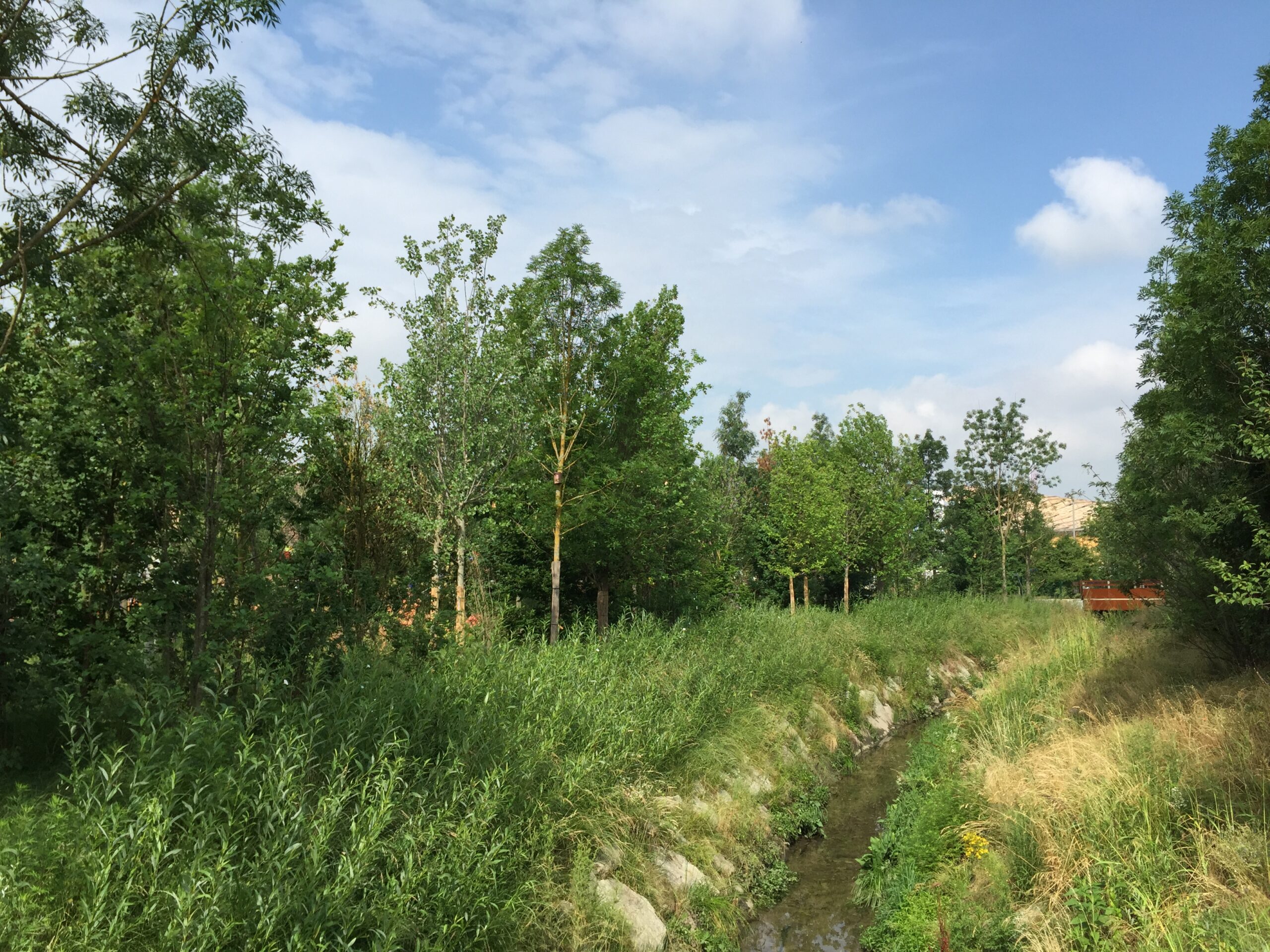
The green ring is the permanent legacy of the exposition. This green belt is characterized by the presence of a linear forest and a canal surrounding the site, configuring itself as a modern evocation of the natural forest of the Po Valley. The ring acts as an ecological filter, which not only mitigates the visual impact of neighbouring infrastructure but also contributes to the reduction of noise and air pollution. The Green Belt is designed not only as a physical mitigation barrier, but as an element of dialogue between the exhibition site and nearby degraded urban areas, offering a replicable model of urban redevelopment. The project creates a natural forest with a mix of mature native species and young trees, which integrates aquatic elements that enrich biodiversity.
Along the waterways the landscape is transformed with the presence of hygrophilous and herbaceous species that follow the slope of the land towards the water, creating a dynamic and interactive river environment attracting numerous faunal species and creating new ecological habitats. The works are strategically integrated into the parks network and the ecological network of the metropolitan city of Milan, emphasizing the role of greenery as an element of ecological, urban and social connection.
One of the most innovative and experimental aspects, also from the point of view of construction, consists in the on-site supply of native plant species of various types, highly developed, up to 14 meters high and up to 30 years old, which have taken possession of the site in a few months with the creation of an exceptional “ready effect”, never before achieved on such a vast scale and with the extensive use of cutting-edge techniques, contributing significantly to the success of the event.
Client
Metropolitana Milanese S.p.a per conto EXPO s.p.a.
Place
Milano, Italia
Year
2011-2015
Surface
370.000 mq
Status
Completato
Tipology
Rigenerazione urbana, Infrastrutture
Partners
–
Team
G. Selleri, B. Selleri, M. Poggi con F. Zagari, S. Bianchi, F. Iandoli, V. Corbari, D. Bossi
Construction costs
€ 42.000.000