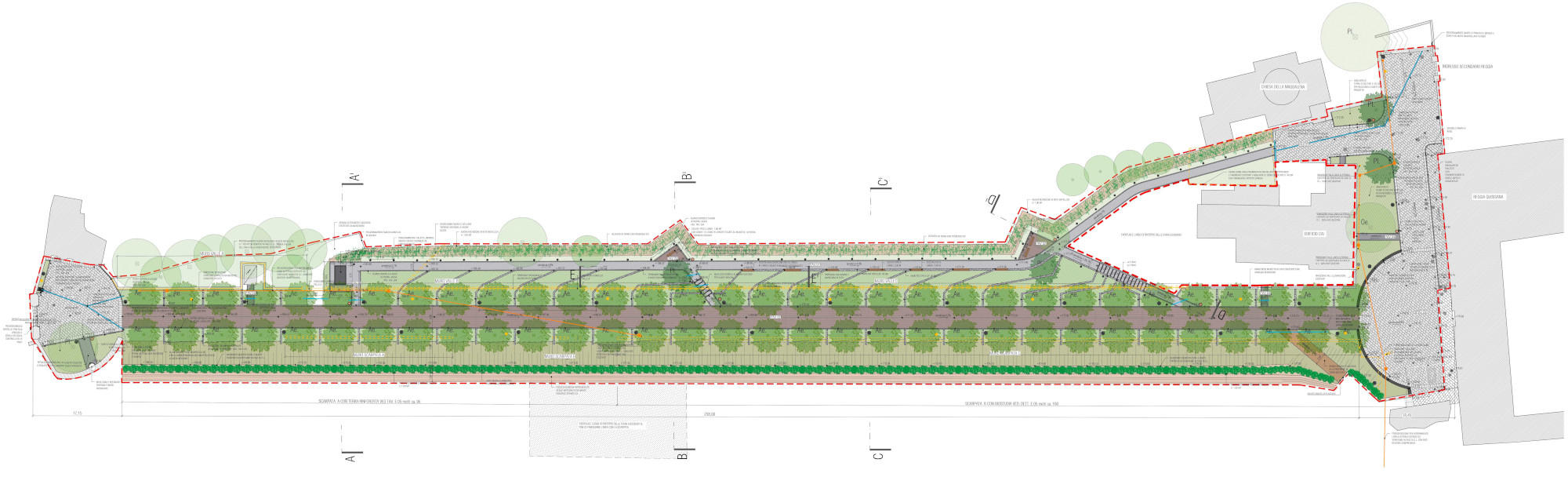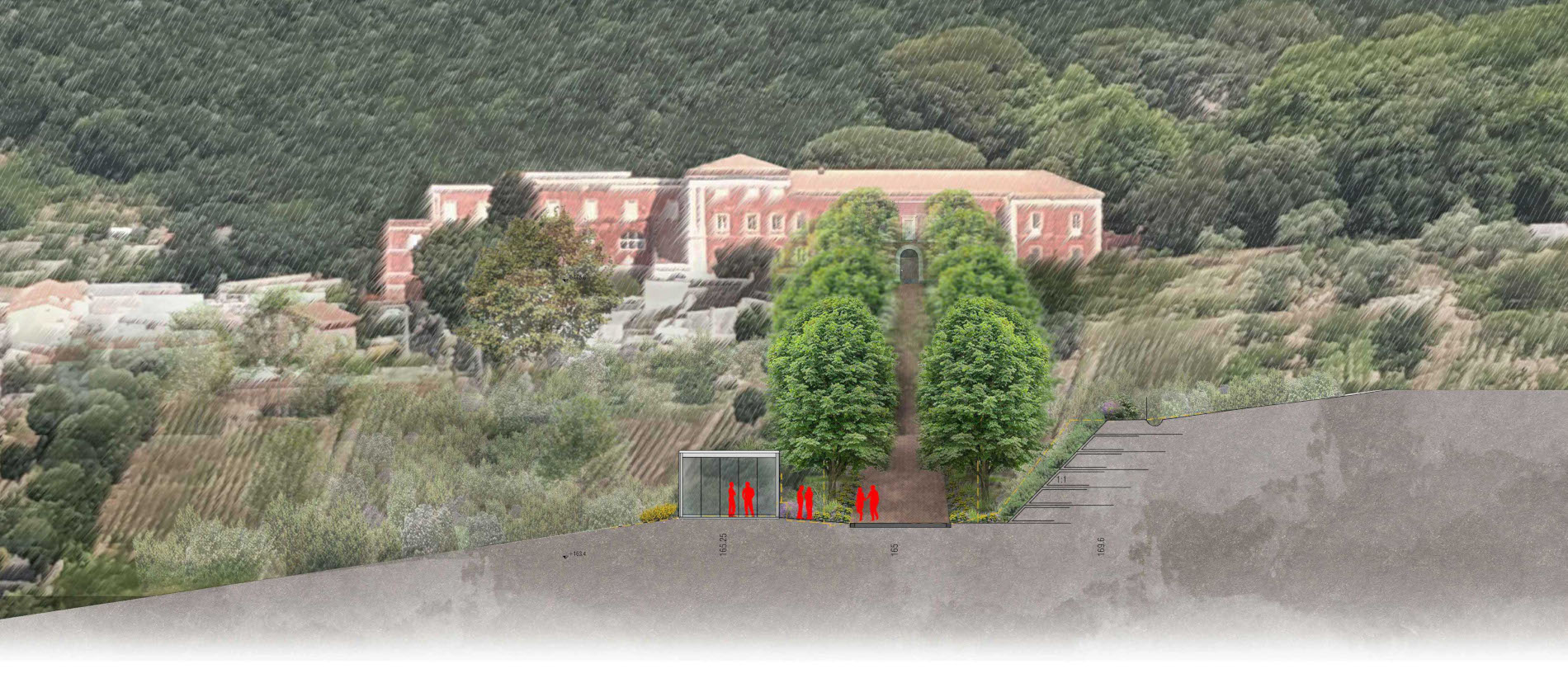

The redevelopment project of the historic garden of the Bourbon Palace of Quisisana represents an exemplary balance between heritage conservation and the introduction of innovative solutions based on nature and water management. The renovation was guided by an in-depth Visual Tree Assessment (VTA) analysis, which led to the replacement of about 50 ill chestnut trees along the access avenue to the palace, with younger chestnut species, providing them with sufficient space to grow compared to the existing situation.
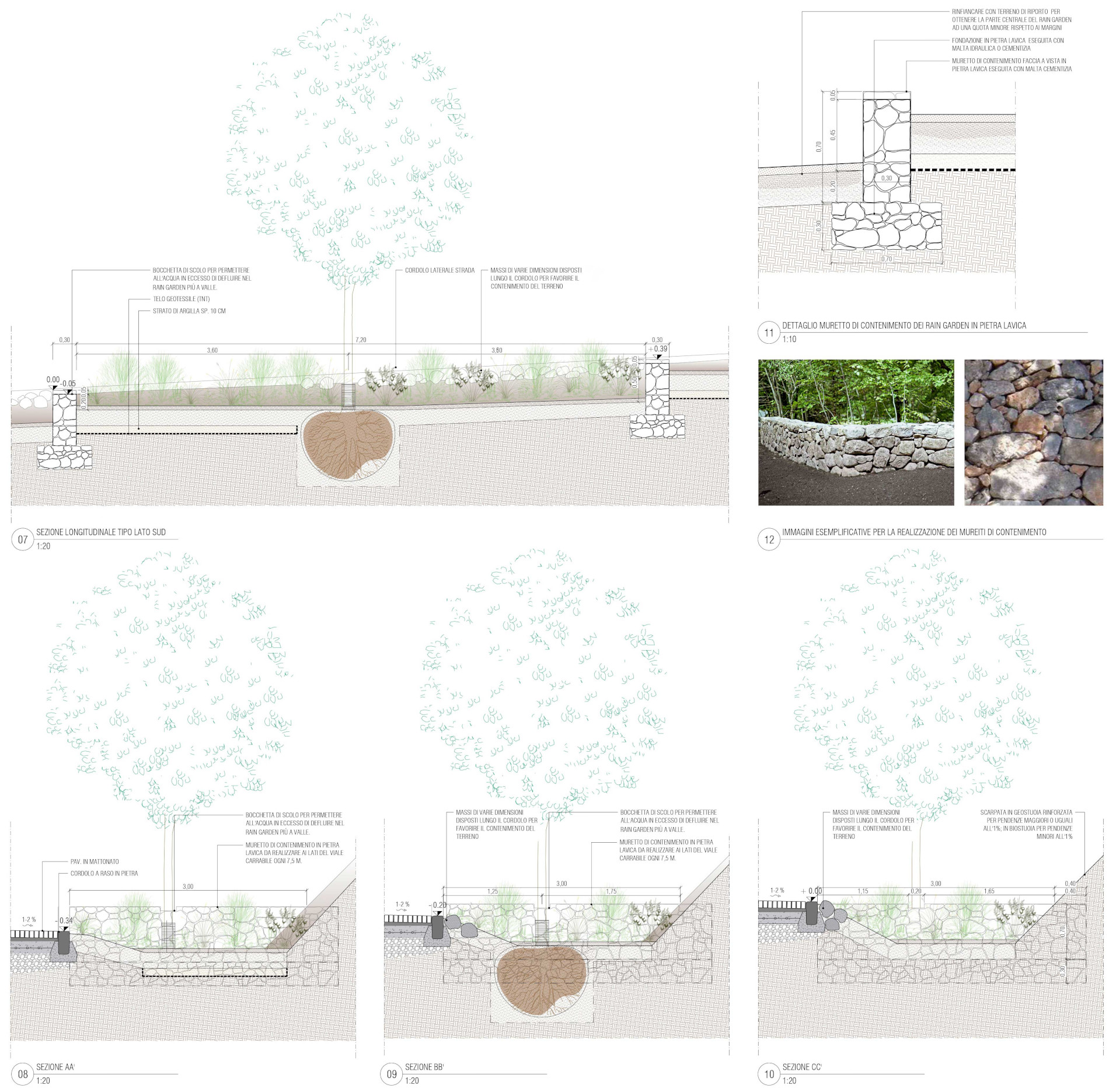
The access venue to the palace has been completely transformed through the introduction of a terracing system made with local lava stone walls. These terraces, not only aesthetically enhance the entrance, but are functionally designed as rain gardens, which utilize the natural slope of the terrain for an effective rainwater management. Connected in a cascading sequence, these rain gardens retain water thanks to the presence of a waterproof clay layer, allowing for controlled release of water and contributing to the site’s biodiversity.
The selection of plants for the rain gardens has been carefully studied to meet the specific conditions of sun exposure, soil type, and local climate. The vegetation is therefore divided into xerophytic species, suitable for higher and drier areas, and hydrophilic species, ideal for areas with higher water retention and clay subsoils. This approach not only ensures a prolonged and varied bloom throughout all seasons, but also a sustainable management of water resources, which is particularly valuable during periods of drought.
Through this project, the Reggia di Quisisana becomes the centerpiece of an innovative green narrative, where the integration of engineering techniques and nature-based solutions highlights the historical significance of the site, while simultaneously promotes biodiversity and environmental resilience.
Client
Municipality of Castellammare di Stabia
Place
Castellamare di Stabia (NA), Italy
Years
2021-2024
Surface
10.000 mq
Status
Realized
Typology
Parks and Gardens, Historical Gardens
Partners
Engup s.r.l. (impianti)
Team
G. Selleri, L. Baldini, S. Valassina, F. Maglia
Construction costs
€ 1.600.000